
La voix humaine
La voix humaine
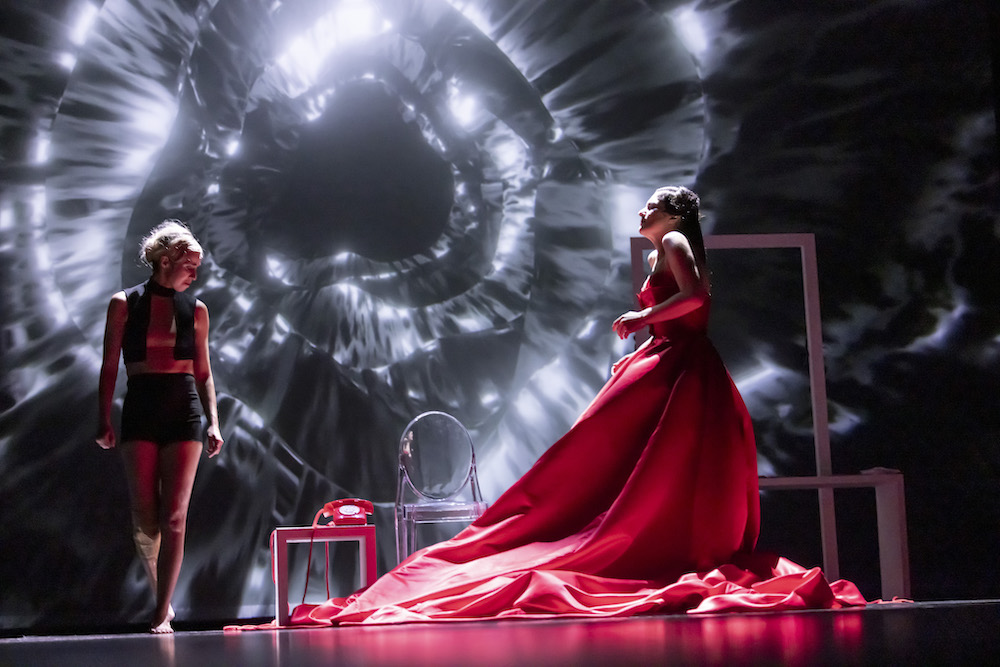
La Voix Humaine marked my directorial debut in operatic repertoire — a reimagining of Cocteau and Poulenc’s monodrama through the lens of the female gaze.
Synopsis
The phone rings. Over the next few minutes, we hear one side of a young woman’s final conversation with her ex-lover. Will she try everything to win him back, or will she find the strength to finally see the truth of his hold over her?
2025-2026
La voix humaine
de Francis Poulenc & Jean Cocteau
“For five years now, I have been living for you, you have been my only breath of fresh air, I spend my time waiting for you, believing you are dead if you are late, dying from believing you are dead, coming back to life when you walk in and when you are finally there, dying of fear that you will leave. Now, I can breathe because you are talking to me…”
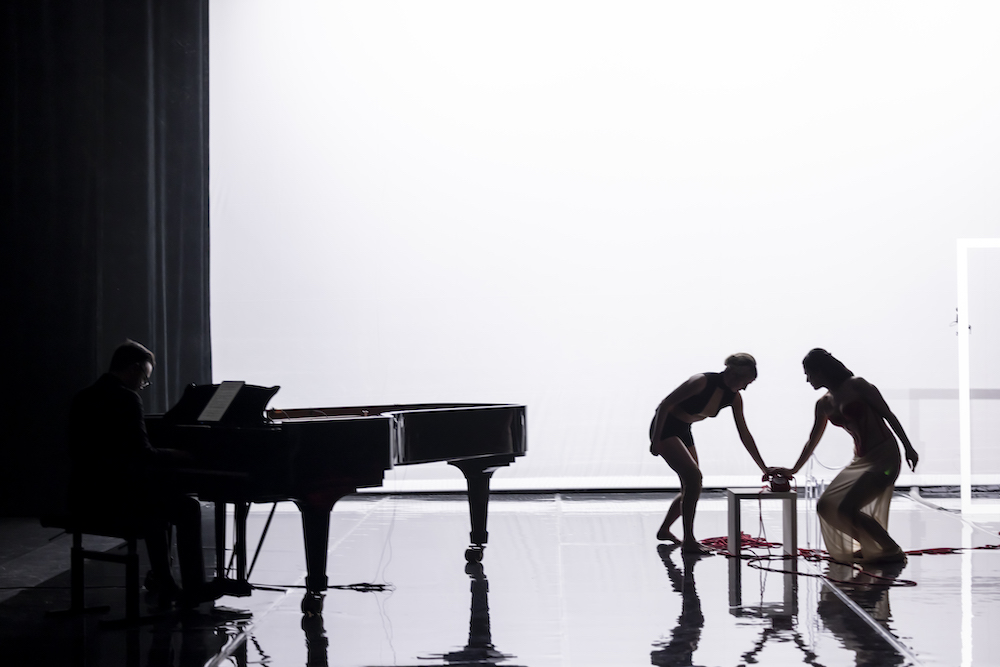
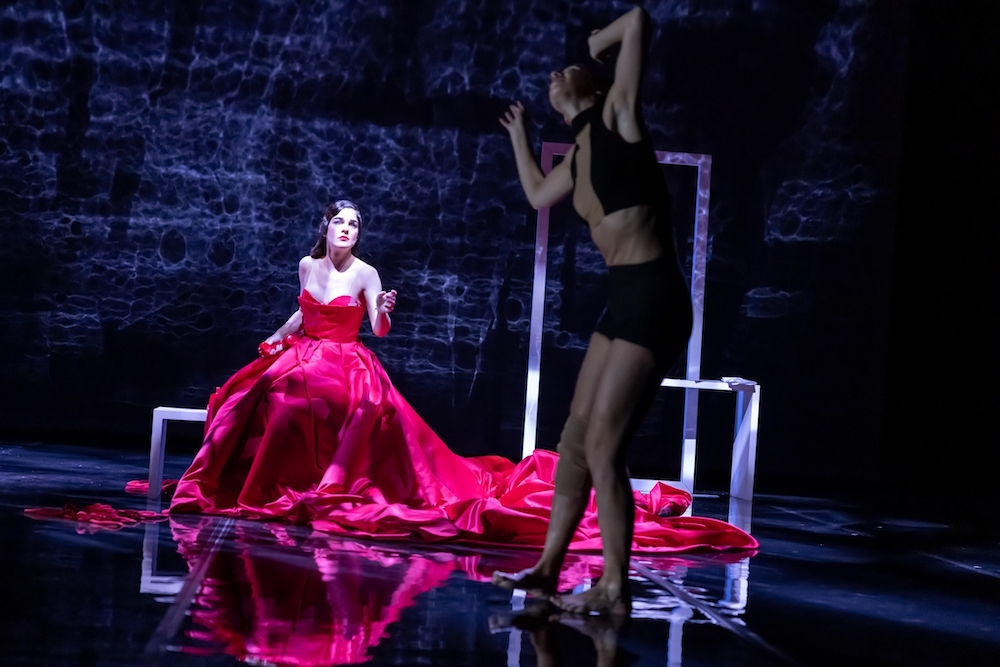
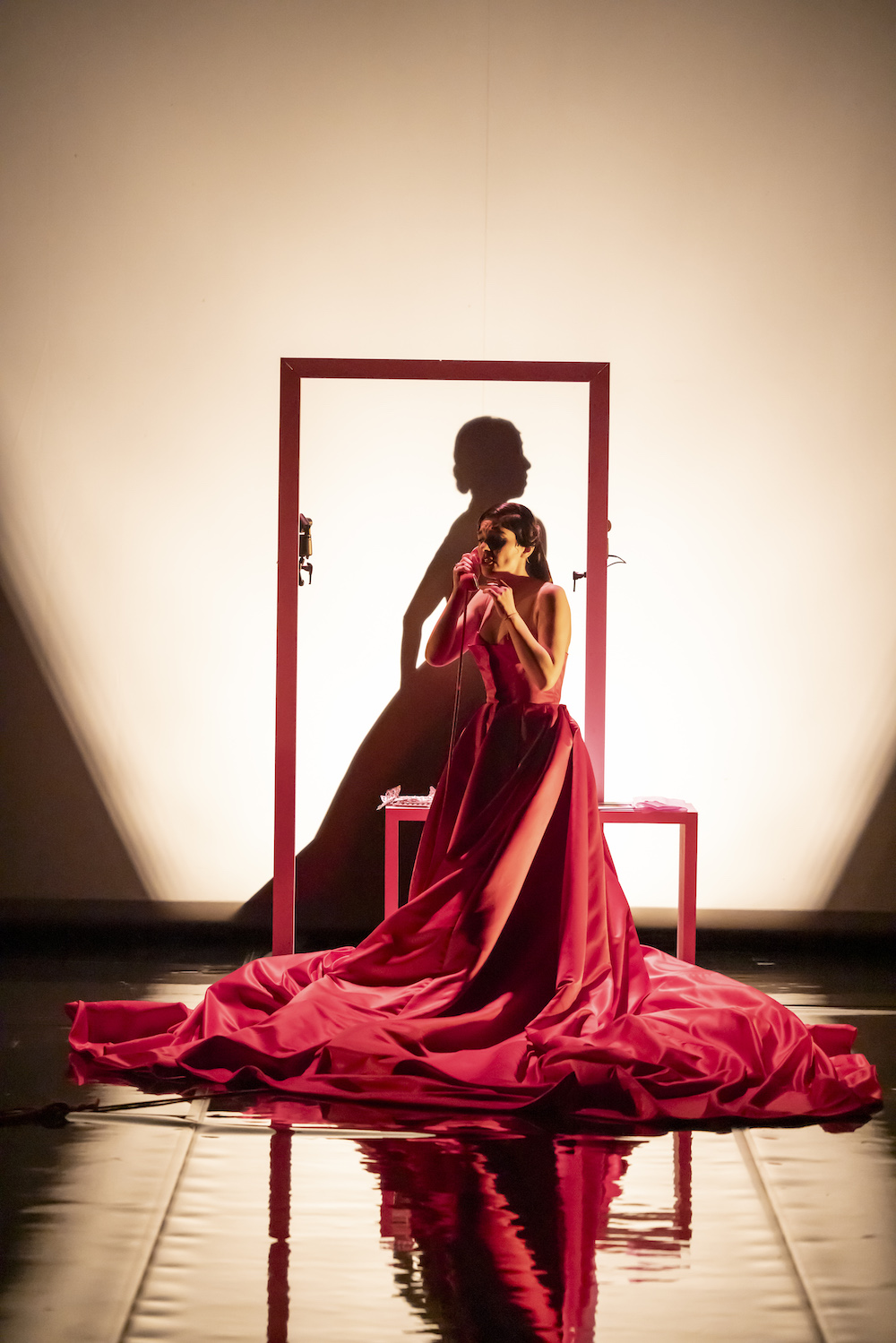
This staging questions the traditional portrayal of the central character of Elle as a hysterical, abandoned woman, and instead examines the deeper psychological dimensions of her fragmentation. The piece explores how power dynamics shape emotional narratives, focusing on the invisible violences that emerge within intimate relationships, especially those marked by manipulation, control, and emotional dependence. Through visual dramaturgy, language, and embodied movement, the production gives form to the unsaid, revealing a woman struggling to exist within the boundaries of imposed symbols and societal expectations.
As Elle’s world dissolves, we witness the erosion of identity and the suffocating effects of a psychological hold that renders her both hyper-visible and utterly alone. The question that emerges is not simply whether she will be heard, but whether she can still find herself within the silence, and detach.
The production received the Fonds stART-up for Young Artists and will be reprised in 2026 at Escher Theater and Trifolion Echternach. It has also been selected as a case study at the University of Luxembourg for the Winter Semester 2025, highlighting its contribution as a critical reinterpretation of a canonical theatrical/operatic work.
Team
- Artistic & stage direction: Mária Devitzaki
- Choreography: Rhiannon Morgan
- Dramaturg: Renelde Pierlot
- Choreographic consultant: Baptiste Hilbert
- Set design & costumes: Peggy Wurth
- Lighting design: Jonathan Christoph
- Sound design: Emre Sevindik
Performers
- Vocals: Mária Devitzaki
- Dance: Melina Bountzika
- Piano: Konstantinos Diminakis
Partnership
- Co-productions: Esher Theater, Centre des Arts Pluriels Ettelbrück (CAPE)
- Financial support: Startup Fund / Grand Duchess Charlotte Relief Fund, Luxembourg Ministry of Culture
- Support: Trois C-L / Maison pour la danse
What people are saying
“For an entire evening, the audience held its breath, hanging on the words of a love that is falling apart.”
Michel Schroeder, Zeitung vum Lëtzebuerger Vollek (read the full review here)
“When I saw the photos online, I immediately knew it was Maria Devitzaki’s work. She has a truly distinctive visual identity.”
Journalist, RTL Luxembourg (read the full review here)
“Seeing the woman in the red dress, the symbol was so clearly readable. I empathized with her struggle, my own struggle.”
Audience member, CAPE Ettelbruck (read the full review here)
“From the very first minutes, the audience was struck by the fragility of the character, but also by a kind of strength that emanated from her.”
Michel Schroeder, Zeitung vum Lëtzebuerger Vollek (read the full review here)
“The audience, attentive and silent throughout the performance, gave a warm ovation at the end of the show.”
Michel Schroeder, Zeitung vum Lëtzebuerger Vollek (read the full review here)
Director’s note
In La Voix Humaine, I revisit Cocteau and Poulenc’s masterpiece not to tell anothe story of despair, but to hold up a mirror of resistance. The woman we meet here is not the heroine of a romantic, somewhat banal, domestic tragedy. She is a consciousness awakening within the ruins of a relationship, fighting to reclaim her own narrative.
To restage La Voix Humaine today is to confront the way opera has looked at women.
Through a female gaze, I aim to strip away decades of distortion that have reduced the role of Elle to a stereotype: the hysterical lover, the aging abandoned woman, the femme fragile. What lies beneath is a woman navigating invisible violences and power dynamics hidden in intimacy. Emotional dependency, manipulation, the quiet erosion of self. What lies beneath is an Elle so truthful that the audience can recognise themselves in her. So many “Elles” can see their own reflection on stage.
The visual language is one of poetic minimalism. The protagonist is buried under an enormous dress, a monumental sculpture of beauty and control. She drags its weight across her room, suffocating under its elegant layers that have become her cage: to be perfect, composed, desired. It recalls somewhat Beckett’s Happy Days: the slow engulfing of the body within appearances.
Peeling back the layers, the necessity of the body’s presence appears evident. Another Elle, mirroring her own internal struggles, the raw sentiment, all the things that are left unsaid in silence.
As both singer and director, I approach La Voix Humaine as an autoportrait: an act of self-study through the body and the voice. To perform and stage at once is not a constraint for me, but a method. To blur the border between subject and observer, to expose the performer as both creator and created.
This project belongs to a larger research on representation in opera, on how inherited forms can be reimagined through truth, vulnerability, and female agency.
Upcoming events
La voix humaine
Trifolion, Echternach
Wed, April 29, 2026